
If you’ve been told you have arthritis, or your knees, hips or hands have started aching more than they used to, the advice you’ll have picked up over the years is probably “go easy on it.” Is strength training actually safe for arthritis? Yes, and for most people it’s one of the more useful things they can do. Regular, moderate strength work builds the muscle that supports a joint, and the evidence links it to less pain and a lower rate of knee osteoarthritis over time, not more.
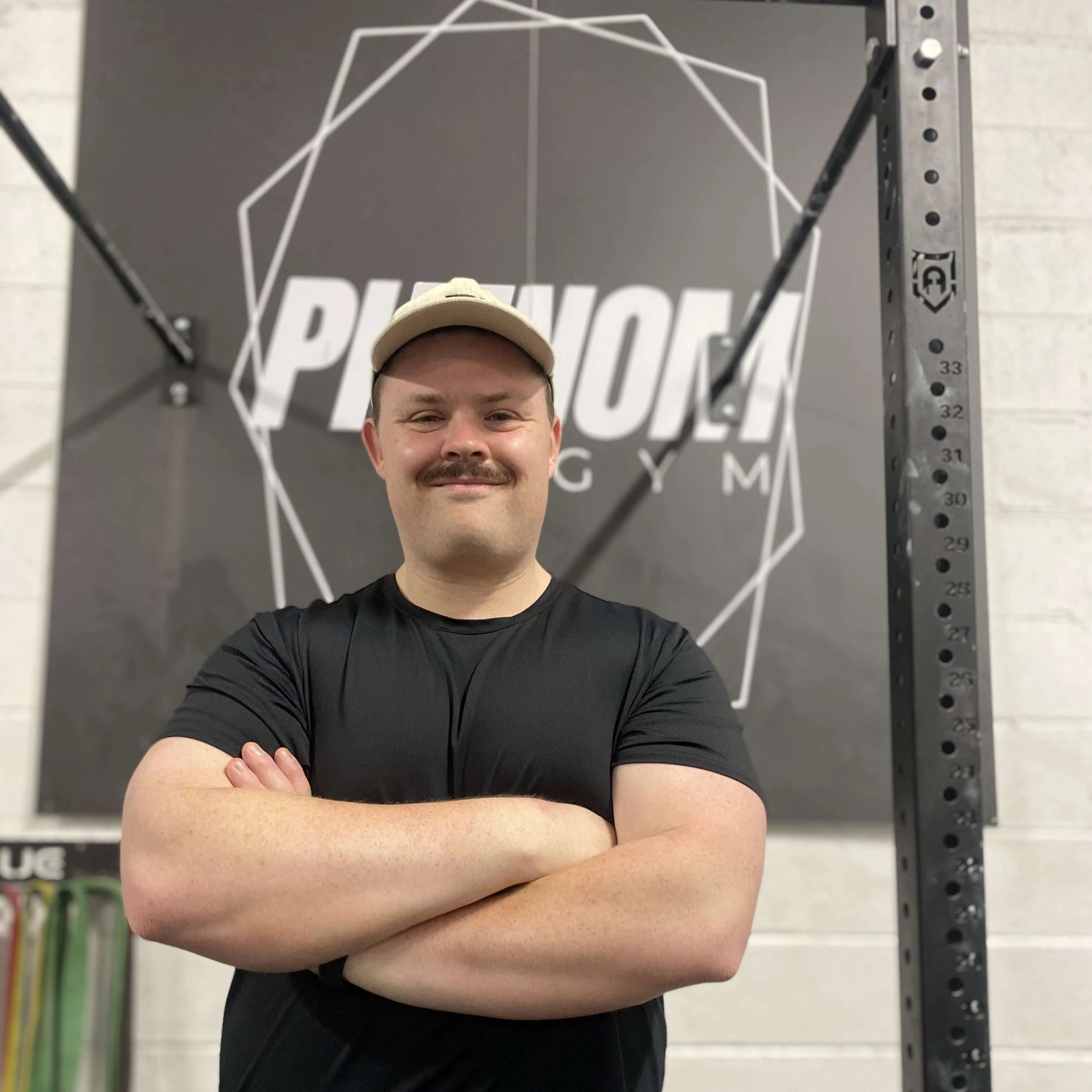
I’m Charlie Johns, a personal trainer based in Cork. A good number of the people I coach are in their 40s, 50s and 60s, desk workers whose joints have started to niggle, or parents who’ve noticed their knees complaining on the stairs since the kids came along. If that’s you, and you’ve been putting off the gym because you’re worried it’ll make things worse, this guide is for you. I’m a trainer, not a doctor, so I’ll flag where a GP or physio should have the final say.
The short answer
- ✓ Strength train two or three times a week. Moderate effort, not maximal effort, is what the evidence supports.
- ✓ Focus on the muscles around the joint that bothers you. Strong quads and glutes do a lot for a sore knee or hip.
- ✓ Some soreness is normal. Sharp pain, swelling, or pain that lingers for hours afterwards is not, and is your cue to ease off.
- ✓ Going heavier isn't the goal. A major trial found high-intensity training gave no extra benefit over a moderate approach, and caused more niggles along the way.
- ✓ Get your GP or physio's input first if you have a diagnosis you haven't discussed with them, a recent flare, or a joint that's been operated on.
Why ‘just rest it’ is outdated advice
For a long time, the standard advice for sore joints was to rest them. It made sense on paper: if something hurts when it moves, stop moving it. It also turned out to be wrong for most types of arthritis, and it’s a big part of why so many people quietly stop being active once their joints start complaining.
Osteoarthritis, the most common type, isn’t simple wear like a tyre running down. Cartilage responds to load, and the muscles around a joint do a lot of the work of protecting it. Rest doesn’t strengthen those muscles. It weakens them, which usually leaves the joint carrying more of the load on its own, not less. Osteoarthritis is also far more common than people expect: a study of Irish adults aged 50 and over, part of The Irish Longitudinal Study on Ageing, found around 13% had it, rising to nearly 18% of people over 80. Chances are you already know someone managing it, even if they’ve never mentioned it.
What the evidence actually says
Both the Arthritis Foundation and Ireland’s HSE recommend muscle-strengthening exercise for people with arthritis, done on at least two days a week alongside regular aerobic activity such as walking or cycling. That’s not a cautious afterthought. It’s the standard recommendation, in the same breath as the exercise types you’d expect for anyone.
The longer-term picture backs it up. A study covered by Harvard Health followed over 2,600 adults, averaging 64 years old, for eight years. People who did strength training had rates of knee osteoarthritis and knee pain around 20% lower than people who never had, and starting later in life, after 50, gave a similar benefit to starting younger. Muscle around a joint acts like a shock absorber. Building it doesn’t just help you move better day to day, it appears to lower the odds of that joint giving you trouble at all.
The bit nobody tells you: harder isn’t better
Here’s where a lot of fitness content oversells it, and where I’d rather be straight with you. More intensity is not automatically more protective.
A large trial published in JAMA, known as the START trial, put people with knee osteoarthritis through 18 months of either high-intensity strength training, low-intensity strength training, or a non-exercise control. At the end, the high-intensity group had no less knee pain and no lower joint compressive forces than the low-intensity group. What they did have was more minor injuries along the way, over three times as many as the control group.
That’s a genuinely useful finding, and it lines up with how I’d coach you anyway. You don’t need to chase your one-rep max to get the benefit. A moderate, well-run programme that you can actually stick to beats a brutal one that flares you up and puts you off training within a month. This is the same principle I coach everyone on, whatever their joints are doing: slow, steady progress wins. It just matters more here.
A sensible starting plan
Strengthen the muscles around the joint that bothers you most. For knees and hips, that usually means the quads, glutes and hip muscles. Keep the range of motion comfortable and avoid locking the joint out hard at the top of a movement.
| Exercise | Sets x reps | Coaching note |
|---|---|---|
| Sit-to-stand (chair squat) | 2 x 8 to 12 | Use a chair or bench as a target. Hold the armrests for support if you need to at first. |
| Step-up onto a low box | 2 x 8 each leg | Start with a low step. Drive up through the whole foot, not just the toes. |
| Glute bridge | 2 x 10 to 12 | Squeeze at the top for a second. Builds the hips without loading the knee. |
| Wall or incline push-up | 2 x 8 to 12 | A gentler option than a floor push-up if your wrists or shoulders are sore too. |
| Seated row or resistance band row | 2 x 10 to 12 | Good for posture and upper back strength without stressing sore lower-body joints. |
| Standing march or heel raise | 2 x 10 each side | Doubles as a balance exercise, which matters as much as strength for staying steady. |
Two sessions a week is a fine place to begin. Pair it with some low-impact aerobic activity most days, walking, cycling or swimming all work well and won’t undo any of the strength work. For a wider look at how to fit sessions around your week, see how often you should go to the gym, and if the whole idea of walking into a gym feels daunting on top of everything else, my guide to overcoming gym anxiety covers that separately.
How heavy, how often
Pick a weight or resistance where the last couple of reps of each set feel like real effort, but your technique stays clean throughout. That’s roughly moderate effort, nowhere near a maximum lift. As it gets easier, add a small amount of weight or a rep or two rather than jumping up in big steps.
Two to three sessions a week, with a rest day between them, matches what the HSE and Arthritis Foundation both recommend. If you’re newer to training altogether, or you’re not sure what a sensible starting point looks like for your fitness in general, my guide to how long it takes to see results from personal training sets realistic expectations for the first few months.
If you’d rather learn the moves with someone watching your technique before you go it alone, that’s exactly what 1:1 personal training at Phenom Gym is for, particularly around a joint that needs a bit more care than usual.
Managing a flare-up
Arthritis doesn’t behave the same way every week, and a flare doesn’t mean you have to stop entirely. Most guidance, including the HSE’s, suggests staying active through a flare but switching to something gentler, like a short walk or light range-of-motion work, rather than pushing through your normal session.
A rough rule of thumb worth knowing: some ache during or shortly after a new exercise is expected. Pain that’s still there two hours later, or that’s sharper than your usual ache, is a sign to back off that particular movement and give the joint a proper rest day before trying again, lighter.
When to see your GP or physio first
The plan above is written for people with mild to moderate joint pain who haven’t had a specific “avoid this” from a clinician. Speak to your GP or a physiotherapist before you start if any of these apply to you:
- → You've had a recent flare-up, swelling, or your joint feels warm to the touch.
- → You've had joint surgery, including a replacement, in the last 12 months.
- → Your pain is sharp, sudden, or came on after an injury rather than gradually.
- → You have rheumatoid arthritis or another inflammatory type, which can need different guidance to osteoarthritis.
- → You're simply not sure whether a movement is safe for your specific joint.
None of this rules lifting out. It usually just means starting with a professional’s sign-off and, ideally, a coach who’s happy to build around what they tell you.
The bigger picture
The old instinct to protect a sore joint by resting it is understandable, but the evidence points the other way. Two or three moderate strength sessions a week, built around the muscles that support your joints, is linked to less pain and a lower rate of osteoarthritis over time, not more, and you don’t need to train anywhere near your limit to get that benefit. It’s the same principle behind training for stronger bones as you get older: load, applied sensibly and consistently, tends to help the body hold up rather than break down.
If you’d like help building a plan around your own joints, I’m a personal trainer based in Cork, coaching at Phenom Gym in Ballintemple. Most people in this position do well on a 12-week structured plan, which pairs coached sessions with programming that adapts as you go. If you’re outside Cork, online coaching follows the same approach remotely. Not sure what any of this costs or how to pick the right coach? My guides on what a personal trainer costs in Cork and how to choose one will help you compare.
When you’re ready, book a free 30-minute consultation. We’ll talk through what your joints are telling you, what your GP or physio has said if you’ve seen one, and work out a sensible place to start. No pressure, no sales pitch.
Frequently asked questions
Is strength training safe if I have arthritis?
For most people, yes. The Arthritis Foundation and Ireland's HSE both recommend muscle-strengthening exercise for people with arthritis, alongside regular aerobic activity. Strength training builds the muscle that supports your joints, and it doesn't need to be heavy or high-intensity to help. Check with your GP or physio first if you have a diagnosis you haven't discussed with them, a recent flare, or joint damage that needs specific guidance.
Does lifting weights make arthritis worse?
Not when it's programmed sensibly. Some soreness after a new exercise is normal and settles within a day or two. Pain that is sharp, lasts more than a couple of hours after training, or comes with swelling is a sign to ease off and speak to your GP or physio. The evidence points the other way overall: people who strength train have a lower rate of knee osteoarthritis and pain than people who never have.
Should I lift heavy weights if I have arthritis?
Not necessarily. A large trial published in JAMA (the START trial) found that high-intensity strength training didn't reduce knee pain or knee joint forces any more than low-intensity training in adults with knee osteoarthritis, and it came with more minor injuries along the way. Moderate, consistent training beats going as heavy as possible.
What's the best exercise for knee osteoarthritis?
There isn't one single best exercise. A mix of strengthening moves for your quads, glutes and hips, such as sit-to-stands, step-ups and bridges, done two to three times a week, is well supported by the evidence. Low-impact cardio like walking, cycling or swimming works well alongside it.
How often should I strength train with arthritis?
Two to three sessions a week is a sensible starting point, with a rest day between sessions, in line with HSE guidance. Consistency at a manageable effort matters more than any single hard session.
Can a personal trainer help with arthritis?
Yes. A trainer can teach safe technique, adapt exercises around a painful joint and build a programme that progresses gradually. A trainer isn't a clinician, though, so if you have a diagnosis, a recent flare or a surgery, get your GP or physio's guidance first and share it with your coach.