
Most “how to choose a personal trainer in Cork” articles are listicles in disguise. They lead with a vague “look for qualifications and experience” then spend the rest of the page reviewing local trainers and hoping you click through.
This isn’t that. This is a proper guide, written by a personal trainer in Cork, designed to help you make a sensible decision, including the option of not hiring me. I’d rather you pick the right coach for you than the wrong one who happens to be me.
By the end of this you’ll know exactly what qualifications matter (and which don’t), the questions to ask before you sign up to anything, the red flags that should make you walk away, and a simple framework for matching the right type of coaching to your actual situation.
What qualifications actually mean in Ireland
The minimum bar to legally practise as a personal trainer in Ireland is a Level 4 personal training qualification. In Irish/EU terms that’s EQF Level 4, the same standard as an Australian Certificate IV in Fitness or a UK Level 3 PT cert. Most legitimate Cork trainers have this.
Some have considerably more, including specialist certifications in strength coaching, female-specific training, pre/post-natal work, rehab, nutrition, or sports performance. Each of these adds real value if it’s relevant to what you want. A pre/post-natal cert doesn’t matter if you’re a 45-year-old man who wants to deadlift. A powerlifting qualification doesn’t matter if you want to lose weight and feel better.
The honest truth is that the entry-level qualification on its own is a low bar. What matters far more is how many coaching hours the trainer has actually logged with real clients. The certs prove they passed an exam. The hours prove they can actually coach.
When you’re weighing a trainer up, ask:
- What’s your highest qualification, and where did you get it?
- How many years have you been coaching full-time (or part-time, if relevant)?
- Roughly how many clients have you worked with?
- How many coaching hours do you have under your belt?
If the answer to any of these is hand-wavy or evasive, that tells you something on its own.
The five things that actually matter when picking a PT
In rough order of importance:
1. They’ve coached people like you before
If you’re a beginner who hasn’t been in a gym for a decade, you need a coach who’s worked with beginners. Not one whose Instagram is full of stage-ready physique competitors. Coaching beginners and coaching advanced lifters are genuinely different skills. What gets you from zero to consistent is not the same thing as what takes you from intermediate to advanced.
Ask: “Who are the clients you most enjoy working with, and what do they typically come to you wanting?” If the answer doesn’t sound like you, that’s a signal.
2. They communicate clearly
This sounds soft but it’s actually the single biggest predictor of whether coaching will work for you. Some trainers are brilliant lifters but can’t explain a hip hinge to save their life. Others have walked thousands of nervous beginners through their first squat without once making them feel stupid.
You can test this in the consultation. Pay attention to how they explain things. Do they default to jargon? Do they make you feel like you’re behind for not knowing something? Or do they meet you where you are?
3. They have a plan, not just sessions
A 1:1 session is just an hour in a gym. What turns sessions into actual progress is the structure around them: the programming, the nutrition guidance, the check-ins, the adjustments every few weeks based on what’s working. Trainers who only sell single sessions are selling you exercise. Trainers who sell structured plans are selling you change.
Both have a place (single sessions are great if you already train and just want occasional coaching), but if you want a real transformation you want the plan, not the session.
4. They publish their prices
This is a small detail that says a lot. Trainers who publish their prices openly are signalling confidence in what they charge. Trainers who hide prices behind “book a free consultation to learn more” are typically doing one of two things: either they’re using the consultation as a hard sales pitch, or they price-discriminate based on what they think they can extract from each lead.
You can read a full breakdown of what personal trainers actually charge in Cork in 2026 here if you want the price-range context.
5. They have a clear cancellation and refund policy
This is the boring legal stuff that becomes very important the moment you need it. What happens if you get injured halfway through a 12-week plan? What happens if your circumstances change? What if you sign up and decide after a few sessions it’s not for you? A trainer with clear, fair policies has thought about this and treated you like a grown-up. A trainer who waves the question away (“ah we’ll sort it if it comes up”) is a trainer you’ll have to fight with if something goes wrong.
Questions to ask in your consultation
Most Cork PTs offer a free first consultation. Use it. Here’s a saveable list of what to actually ask.
About them and their coaching:
- What qualifications do you hold, and where did you get them?
- How many years have you been coaching, and how many hours of coaching do you reckon you have under your belt?
- Who’s the typical client you work with?
- Do you have public liability and professional indemnity insurance?
About what you’d actually get:
- What’s included in your standard plan beyond the sessions themselves? Programming? Nutrition? Weekly check-ins? Message access?
- How often is the programming updated based on my progress?
- How do you handle nutrition? Do you write meal plans, give general guidance, or refer me to a dietitian if I need more?
- How do I contact you between sessions if I have a question?
About the practical stuff:
- What’s your cancellation policy for individual sessions and for full plans?
- How do payments work? Upfront, weekly, monthly? What payment methods do you accept?
- What happens if I want to stop a plan early?
If a trainer can’t give clear, confident answers to all of those, you’re being asked to commit to something they haven’t thought through. Walk.
Red flags: the kinds of bad PTs to walk away from
I’ll be specific. None of these are about naming individuals. They’re about patterns of behaviour I’ve seen across the industry, and ones you can spot in a 30-minute consultation if you know what to look for.
The “trust me” trainer
Won’t tell you their qualifications clearly, can’t quantify their experience, dodges questions about insurance. Tries to sell you on personality and Instagram followers instead of substance. May genuinely be charismatic in person. That’s how they keep getting clients despite being underqualified.
The supplement-stack PT
Within the first 20 minutes of meeting you, brings up the supplement brand they sell. Tells you you’ll get faster results with their preworkout, protein, fat-burner, or greens powder. The session is half coaching, half upsell. A real coach occasionally recommends a supplement (protein powder, vitamin D in winter), but they don’t have a financial interest in you buying it.
The cookie-cutter coach
Promises “fully personalised programming” but the plan they send you in week one looks suspiciously like the plan everyone else gets. Different exercises, same template. Usually doesn’t actually programme. They pull a generic template from an app and fill in your name.
A simple test: ask them what they’d change about the template plan based on your specific goals or injuries. If they can’t answer, the plan isn’t really personalised.
The Instagram aesthetic coach
Has a gorgeous feed. Pictures of themselves training in golden-hour lighting. Photoshoot-style transformations. Hasn’t actually coached a real beginner in two years because they only take “aesthetic clients” who fit the feed. Brilliant coach if you’re already in shape and want to compete. Useless if you’re a 38-year-old parent who hasn’t trained in five years.
The transformation-promiser
“Lose 10kg in 6 weeks guaranteed.” Talks in absolute outcomes with specific timeframes. Either they’re lying, or they’re going to push you into something extreme that you’ll bounce back from inside a year. Sustainable coaches under-promise and over-deliver. Salesmen do the opposite.
The bro with certs
Strong lifter, possibly competitive, technically qualified. But hasn’t done the work of learning how to coach. Defaults to “more weight, push harder” regardless of who you are or what your situation is. Great training partner. Bad coach for 90% of normal people.
The no-policy coach
“Ah we’ll sort it if anything comes up.” Won’t show you a written cancellation or refund policy. No contract. No clear plan structure. Looks casual and friendly, which is partly why it works as a model, until you need to cancel, refund, or change something, at which point you find out the casual approach was actually a feature for them, not for you.
A simple framework for matching a coach to your situation
A practical way to think about which type of coaching fits your situation.
If you’re a complete beginner:
You need someone in the room with you. 1:1 in-person, ideally on a structured plan rather than ad-hoc sessions. Three months minimum to build the habit and learn the basics. Look for a coach who specifically talks about beginners, not one whose marketing is all about advanced clients.
If you’re already training and want to level up:
Either 1:1 occasional sessions (form-checks, plan reviews) or online coaching if you can train independently. You don’t need someone in the room. You need someone to write better programmes than you can and hold you accountable.
If you’ve trained before but fallen off:
You’re in the same boat as the beginner. You need structure and accountability more than you need new exercises. A 12-week plan tends to work well here because three months is what it takes to rebuild the habit properly.
If you have specific goals (wedding, holiday, event, sport):
Look for a coach who’s worked with similar deadlines before. Ask them directly: “Have you worked with clients with a similar deadline? What did you build, and what was realistic?” If they fudge it, they haven’t.
If you have an injury or pre-existing condition:
Talk to a physiotherapist first, then a PT. Trainers can work around injuries safely with the right information, but they’re not clinicians. A good PT will tell you this themselves before you have to ask.
If you’re cost-sensitive:
Online coaching or small-group training. Both can deliver real results for a fraction of 1:1 in-person pricing. The trade-off is less hands-on coaching, which is fine if you’re comfortable in a gym.
My honest pitch (and how to know if I’m right for you)
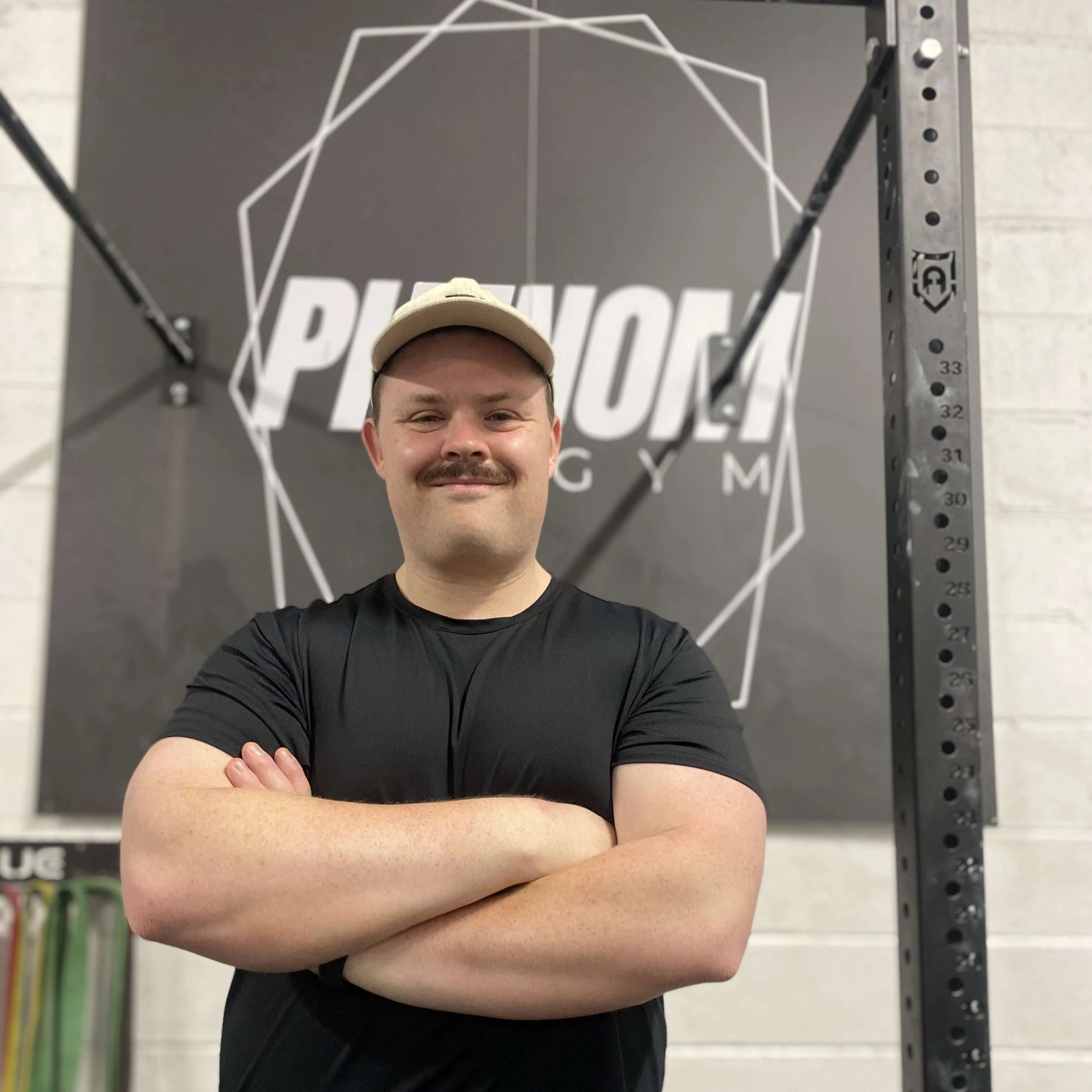
I’m Charlie Johns, an Australian personal trainer based at Phenom Gym in Ballintemple, Cork. I coach everyday adults: parents, desk workers, beginners, and people who’ve been meaning to start for years. I’m not the right coach for competitive athletes or people looking to compete in a physique sport. The Phenom coaches are world-class at that and I’ll happily refer you to them.
I publish all my prices openly (you can see them here), I offer a free 30-minute consultation with no sales pitch, and my terms and refund policies are public and detailed. If you’re a beginner I’ll honestly tell you whether I think you need 1:1, a structured plan, or something else entirely, including whether you should see a physio before training with me.
If anything in this article resonates and you want to talk through your situation, book a consultation. If you read this and decide a different coach is a better fit, that’s also a good outcome. That’s the point of writing this in the first place.