
Most of us don’t think about our bones until something goes wrong. A wrist snaps after a slip on wet leaves, a DXA scan comes back with the word “osteopenia” on it, or a parent breaks a hip and the whole subject stops being abstract.
Can you build bone density with strength training? Yes, and it’s one of the most effective things you can do. Lifting weights two or three times a week, using loads that feel properly challenging, gives your bones a reason to hold on to what they have and, in some people, add a little more. Add some walking or light impact work, enough protein, calcium and vitamin D, and you have a sensible plan for keeping your skeleton strong into your 60s, 70s and beyond.
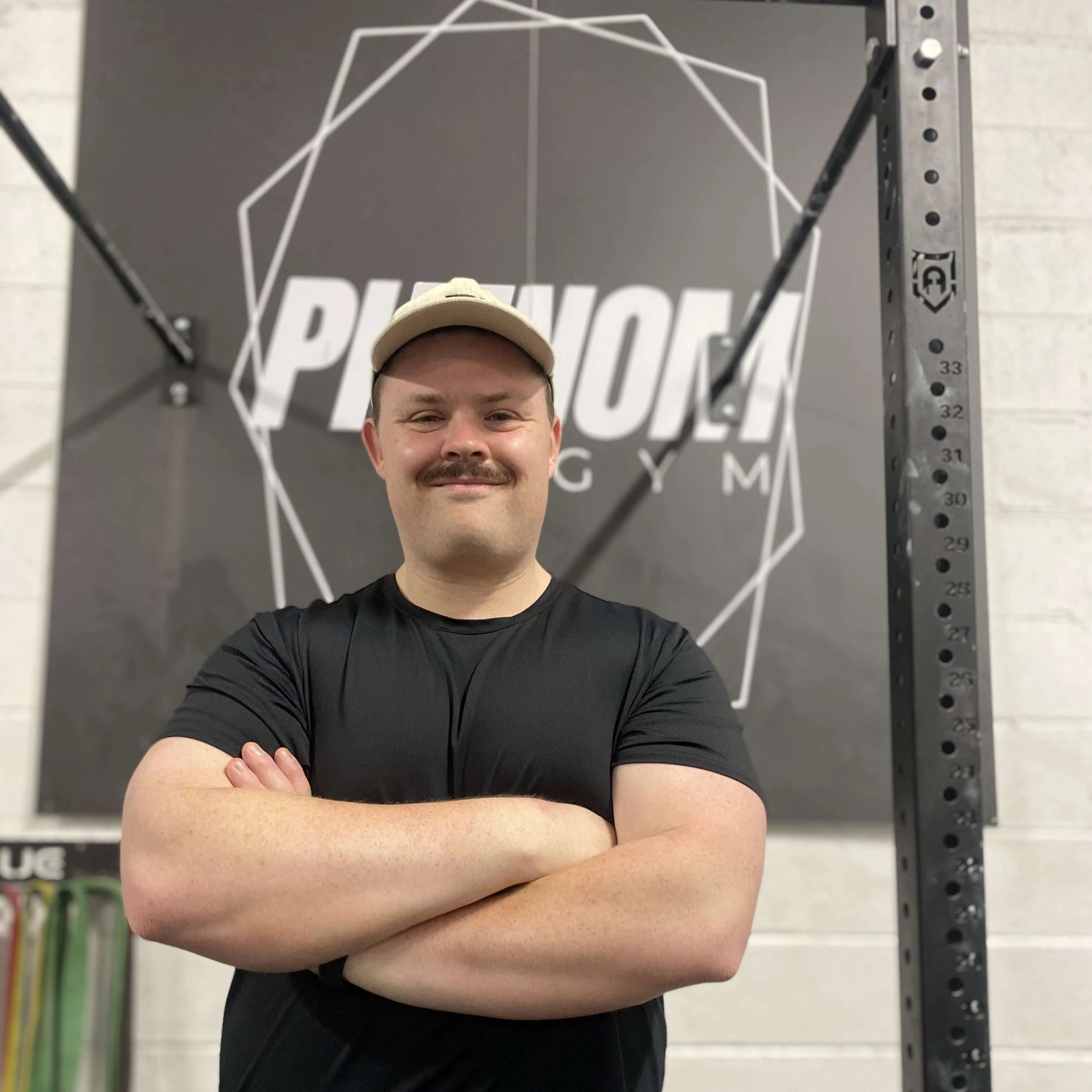
I’m Charlie Johns, a personal trainer based in Cork. The people I coach are mostly desk workers, parents who’ve let training slide since the kids arrived, and people who’ve tried the gym before without a plan and never got going. If you’re in that group and you’re worried about a bad back, sore knees or a family history of osteoporosis, this guide is for you.
Below you’ll find what actually builds bone, what the research says, a simple starter plan, and the situations where you should speak to your GP or physio before you lift anything. I’m a personal trainer, not a doctor, so I’ll flag where medical advice matters.
The short answer
Here’s the whole thing in five lines. The rest of the post explains why.
- ✓ Lift two or three times a week. Cover your legs, back, chest, shoulders and core, with a rest day between sessions.
- ✓ Aim for 8 to 12 reps a set, building to three sets. The last couple of reps should feel hard, with good technique.
- ✓ Add impact. Brisk walking, stairs, hills and, if your joints are healthy, some skipping or low-level jumps.
- ✓ Look after the basics. Enough protein, calcium and vitamin D, and no crash dieting.
- ✓ Check first if you have a diagnosis. If you've been told you have osteoporosis, or you've broken a bone from a minor fall, speak to your GP or physio before starting.
Why bone density matters long before you’re 50
Bone is living tissue, constantly broken down and rebuilt. Through childhood and your teens you build more than you lose, and total bone mass typically peaks somewhere between 25 and 30. After that the balance slowly tips the other way, and you don’t feel it happening. That’s why osteoporosis is often called a silent condition: most people find out when they break something.
For women, the loss speeds up around menopause. Victoria’s Better Health Channel says women lose up to 10% of their bone density in the first five years after menopause, on average, and the decline starts as oestrogen falls in the years before. Men lose bone too, just later and more gradually.
The numbers in Ireland are big. A 2025 review in the Medical Independent puts it at up to 500,000 people with osteoporosis here, and more than 32,000 fractures a year. Because there are no symptoms, many people don’t know they’re affected until the first break.
Here’s the encouraging part. Genes account for a large share of your peak bone mass (estimates run at 60 to 80%), which leaves a meaningful 20 to 40% shaped by things you control, like how active you are and what you eat. And bone responds to training at any age. You can’t go back to being 25, but you can slow the decline and, in some cases, win a little back.
If you’re in your 30s or 40s and sit at a desk all day, now is the ideal time to start. Sitting is the opposite of what bone wants. Bone wants load.
How lifting weights builds stronger bones
Your bones adapt to the demands you place on them. When you lift something heavy, your muscles pull on the bones they attach to, and that pull acts as a signal. The Royal Osteoporosis Society explains it well: muscles tug on bone whenever they work, and bone responds by getting stronger.
Two other things happen alongside that, and they matter just as much. First, stronger muscles mean better balance, and most fractures start with a fall, so anything that makes you steadier protects your bones too. The Irish Osteoporosis Society lists better strength and balance, and a lower risk of falling and breaking bones, as the payoff from the right exercise. Second, strong back muscles help you hold good posture.
It also helps to know what does less. Swimming and cycling are brilliant for your heart and kind to your joints, but your body weight is supported, so they do less for your bones. Keep them if you enjoy them. Just don’t rely on them alone.
What the research says
Two pieces of evidence are worth knowing about.
The LIFTMOR trial. In this Australian study, 101 postmenopausal women aged 58 and over with low bone mass trained for 30 minutes, twice a week, for eight months. The sessions were built around heavy lifts (deadlifts, overhead presses and back squats) plus some impact work. Compared with a control group, the lifters finished with lumbar spine bone density around 4% better and femoral neck density (the top of the thigh bone) around 2% better. It’s published in the Journal of Bone and Mineral Research. Keep one thing in mind: those women were screened first and supervised throughout. Take that as a reason to learn the moves properly and build up gradually.
A 2025 review of the evidence. A network meta-analysis in Scientific Reports pooled 49 studies and 3,360 postmenopausal women. Exercise improved bone density overall, and resistance training combined with aerobic exercise came out on top, ahead of either on its own. Walking alone didn’t show a significant effect on bone density in that analysis. It’s still great for your health, and it works best alongside lifting.
One limit worth knowing: most of this research is in postmenopausal women, because they’re the highest-risk group. The principle that bone responds to load applies to everyone, but if you’re a 35-year-old man, don’t expect the same percentages.
The best exercises for bone density
You need three things: resistance, impact and balance. Here’s how they fit together.
| Type | Examples | What it does for bone |
|---|---|---|
| Resistance (strength) training | Squats, deadlifts and hip hinges, lunges, step-ups, presses, rows, carries | Muscles pull on bone, which signals it to get stronger. This is the backbone of the plan. |
| Impact (weight-bearing) | Brisk walking, stairs, hills, jogging, skipping, dancing, low-level jumps | Your body weight and the ground push back through your legs, hips and spine. |
| Balance and stability | Single-leg stands, heel-to-toe walking, tai chi | Doesn't build bone directly, but lowers your risk of falling. |
For the resistance side, pick moves that load your hips and spine, because those are the sites where fractures do the most damage. That means squat patterns, hip hinges such as the deadlift, lunges and step-ups, presses and rows, and loaded carries like the farmer’s walk. Machines are fine to start with. Free weights ask more of your balance and stabilising muscles, so build towards them.
For impact, the Irish Osteoporosis Society recommends 30 minutes a day of weight-bearing activity for adults, with walking as the foundation. Vary your pace and terrain, and take the stairs when you can. If your joints are healthy, add short bursts of skipping or low-level jumps after a few weeks of lifting. If your knees or hips are sore, stick to walking and stairs.
For balance, single-leg stands while you brush your teeth cost nothing and take a minute.
A simple starter plan
Train twice a week, with at least a day between sessions, alternating the two workouts below. Add a third day once it feels comfortable. This lines up with the Royal Osteoporosis Society’s guidance (two to three sessions a week, 8 to 12 reps, building up to three sets) and with the HSE’s adult guidelines, which recommend muscle-strengthening work on two or more days a week alongside 2.5 to 5 hours of moderate activity. Fewer than half of Irish adults (46%, on 2019 data) meet the HSE’s physical activity guidelines overall, so if you’re not there yet, you’re in good company.
| Exercise | Sets x reps | Coaching note |
|---|---|---|
| Goblet squat | 3 x 8 to 10 | Hold one dumbbell at your chest, sit back and down, keep your chest tall. |
| Romanian deadlift | 3 x 8 to 10 | Push your hips back with soft knees and a flat back. The hip hinge is worth learning first. |
| Dumbbell overhead press | 3 x 8 to 10 | Seated or standing. Brace your stomach and don't lean back. |
| Seated row or band row | 3 x 10 to 12 | Squeeze your shoulder blades together. A strong upper back helps your posture. |
| Farmer's carry | 3 x 30 seconds | Pick up heavy dumbbells and walk tall. |
| Exercise | Sets x reps | Coaching note |
|---|---|---|
| Split squat or reverse lunge | 3 x 8 each leg | Hold a bench or rack for balance at first. |
| Glute bridge or hip thrust | 3 x 10 to 12 | Pause for a second at the top. |
| Incline or floor push-up | 3 x 8 to 12 | Raise your hands onto a bench to make it easier. |
| Lat pulldown or one-arm dumbbell row | 3 x 10 to 12 | Pull with your back, not your arm. |
| Step-ups onto a box or bench | 3 x 8 each leg | Drive through your whole foot and control the way down. |
Spend five minutes warming up before each session with an easy walk or cycle and a few bodyweight squats. Between sessions, add two or three brisk 30-minute walks a week, and take the stairs or a hill when you can.
You don’t need a busy weights floor for any of this. A pair of dumbbells, a bench and a cable machine cover the lot. If the gym feels intimidating, go mid-morning or early afternoon when it’s quiet, or book a few sessions so someone can show you the moves. That’s the fastest way to stop feeling like you’re in the way.
Not sure whether two sessions or three suits you? I’ve broken it down in how often you should go to the gym. If you’re new to lifting, my online vs in-person comparison explains why I’d start with someone in the room for the first couple of months.
How heavy is heavy enough?
Bone adapts to loads it isn’t used to. Lift the same light dumbbells for a year and it has no reason to change. That’s the case for progressive overload, which just means doing a little more over time.
A simple rule: choose a weight where the last two reps of each set feel hard, roughly 7 or 8 out of 10 effort, and your technique stays clean. When you can finish every set at the top of the rep range, add a small amount of weight and drop back to 8 reps. If your form starts to wobble, the weight is too heavy. The Royal Osteoporosis Society suggests starting with a weight you can lift easily and building up gradually, and that’s good advice. Technique first, load second.
The heavy end, like the deadlifts and squats in the LIFTMOR trial, calls for supervised progression rather than an experiment on a Saturday morning. That’s a big part of why I work in person with new lifters. It’s much easier to learn a hip hinge with someone watching than from a video. If you’re in Cork, 1:1 personal training at Phenom Gym is where I’d start.
How long does it take to see a change?
Strength comes first. Most people are lifting noticeably more within two to four weeks, but that’s your nervous system learning the movement, not new bone. Bone renews itself slowly, so think in months and years. The women in the LIFTMOR trial trained for eight months before the scans showed a difference. And DXA scans, the standard test for bone density, usually aren’t repeated more than every year or two, so you’ll feel stronger long before any scan shows a change. Ask your GP or specialist how often they want to re-scan you.
That timeline can feel slow. It’s also why starting earlier pays off: bone you build in your 30s and 40s is in the bank for later. For a wider look at what changes and when, see how long it takes to see results from personal training.
Eating for your bones
You can’t out-lift a poor diet, and bones are no exception. Four things matter most:
- → Protein. Muscle and bone both need it, and the muscle you build is what loads your skeleton. Spread it across your meals.
- → Calcium. Get it from food first: dairy or fortified alternatives, tinned fish with the bones in, calcium-set tofu, kale and broccoli.
- → Vitamin D. Ireland gets very little usable sunlight between October and March, so it's worth asking your GP or pharmacist about a supplement. Don't guess at high doses.
- → Enough food overall. Very low calorie diets can cost you bone as well as muscle. Smoking and heavy drinking speed up bone loss too.
I can help with general guidance on protein and food choices, but if you have a medical condition, a registered dietitian is the right person. I explain where that line sits in can a personal trainer write a meal plan?
Moves to be careful with
For most healthy adults the plan above is fine. If you’ve been told you have low bone density, a few movements need more thought. The Irish Osteoporosis Society advises against old-fashioned sit-ups for everyone, with or without bone loss, and against twisting your back with your feet planted. It also lists forward bends with straight legs, trampolines and vibration machines among the things to skip, and suggests anyone with bone loss gets assessed and monitored by a health professional.
Sit-ups and crunches are what most people reach for when they think “core”, so if you’ve been doing them for your back, planks, bridges and carries are usually a better swap.
Guidance on heavy lifting is less tidy. The same Irish Osteoporosis Society page lists “excessive weights” as something to avoid, while the LIFTMOR trial used heavy lifts with screened participants and supervision throughout. The way through is unglamorous: the right load depends on your scan results, your fracture history and your technique, so decide it with your GP, physio or specialist, and lift with someone who can watch you.
When to see your GP or physio first
Speak to your GP or a physiotherapist before you start if any of these sound like you:
- → You've been diagnosed with osteoporosis or osteopenia, or a DXA scan showed low bone density.
- → You've broken a bone from a fall at standing height or lower, or from very little force.
- → You've lost noticeable height, or your upper back has begun to curve forward.
- → You take long-term steroid tablets, or have a condition or medication that affects bone.
- → You went through menopause early, or a parent has broken a hip.
- → You've had an eating disorder, or a long spell of very low body weight.
- → You're simply not sure.
Your doctor may use a tool called FRAX to estimate your 10-year fracture risk, and can tell you what’s safe for you. The Royal Osteoporosis Society specifically advises checking first if you have a history of many broken bones or spinal fractures, or you’re recovering from a broken bone.
None of this puts lifting off the table. It usually means starting lighter, with a coach who’s happy to work alongside your clinician. And exercise doesn’t replace osteoporosis medicine if you’ve been prescribed it.
The bigger picture
You can’t change your genes or your age. You can change whether your bones get asked to do anything. Two or three lifting sessions a week, some walking and impact, and decent food is a plan almost anyone can follow, and the earlier you start, the more bone you have in the bank when you need it.
If you’d like help putting it together, I’m a personal trainer based in Cork, and I coach at Phenom Gym in Ballintemple. Most beginners do best on a 12-week structured plan, which gives you coached sessions, a written programme and a diet guide. If you’re outside Cork, or already confident in the gym, online coaching uses the same structure remotely. Not sure which way to go? My guides on what a personal trainer costs in Cork and how to choose one will help you compare.
When you’re ready, book a free 30-minute consultation. We’ll talk through your history, your goals and anything your GP has flagged, and work out a sensible place to start.
Frequently asked questions
Can you build bone density with weights?
Yes. Resistance training gives bone a reason to strengthen, and trials in postmenopausal women have shown gains in bone density at the spine and hip with heavy, progressive lifting. The changes are modest and slow, so think in months rather than weeks. Combine lifting with walking or other weight-bearing exercise, and get enough protein, calcium and vitamin D.
How often should I lift weights for bone density?
Two to three sessions a week, with at least one rest day between them, is the usual recommendation from the Royal Osteoporosis Society. Aim for 8 to 12 repetitions per set, build up to three sets, and increase the weight gradually as it gets easier.
Is walking enough for bone density?
Walking is a great foundation, and the Irish Osteoporosis Society recommends 30 minutes of weight-bearing activity a day for adults. On its own, though, it challenges bone less than lifting does. A 2025 analysis of 49 studies found resistance training combined with aerobic exercise gave the best results, while walking alone did not show a significant improvement in bone density.
Can you reverse osteoporosis with exercise?
Exercise can slow bone loss, improve strength and balance, and in some people modestly improve bone density. It is not a replacement for osteoporosis medication if you have been prescribed it. If you have been diagnosed, agree a safe programme with your GP, physio or specialist before you start.
Is it too late to start strength training at 40, 50 or 60?
No. Bone responds to load at any age. You will not rebuild the bone of your twenties, but you can slow the rate of loss, build muscle and improve your balance, all of which lower your fracture risk. Start lighter than you think you need to, and build up gradually with good technique.
Is it safe to lift heavy weights with osteopenia?
Osteopenia means lower than average bone density, which is not the same as osteoporosis, and many people with it lift safely. The right load depends on your scan results, your fracture history and your technique, so check with your GP or physio first, start with lighter weights and consider working with a coach who can watch your form.
Can a personal trainer help with bone density?
Yes. A good trainer can teach you safe technique and build a progressive lifting plan around you. A trainer is not a clinician, though, so if you have osteoporosis, a previous fracture or other medical concerns, get your GP or physio's go-ahead first and work alongside them.