
How do you overcome gym anxiety? Start small, go when it’s quiet, and arrive with a plan on your phone so you’re never left wondering what to do next. Keep your first visits to 30 minutes, stick to a few simple machines and go back twice a week. Confidence comes from repetition, not from a pep talk beforehand. After three or four visits, the place stops feeling like somebody else’s territory.
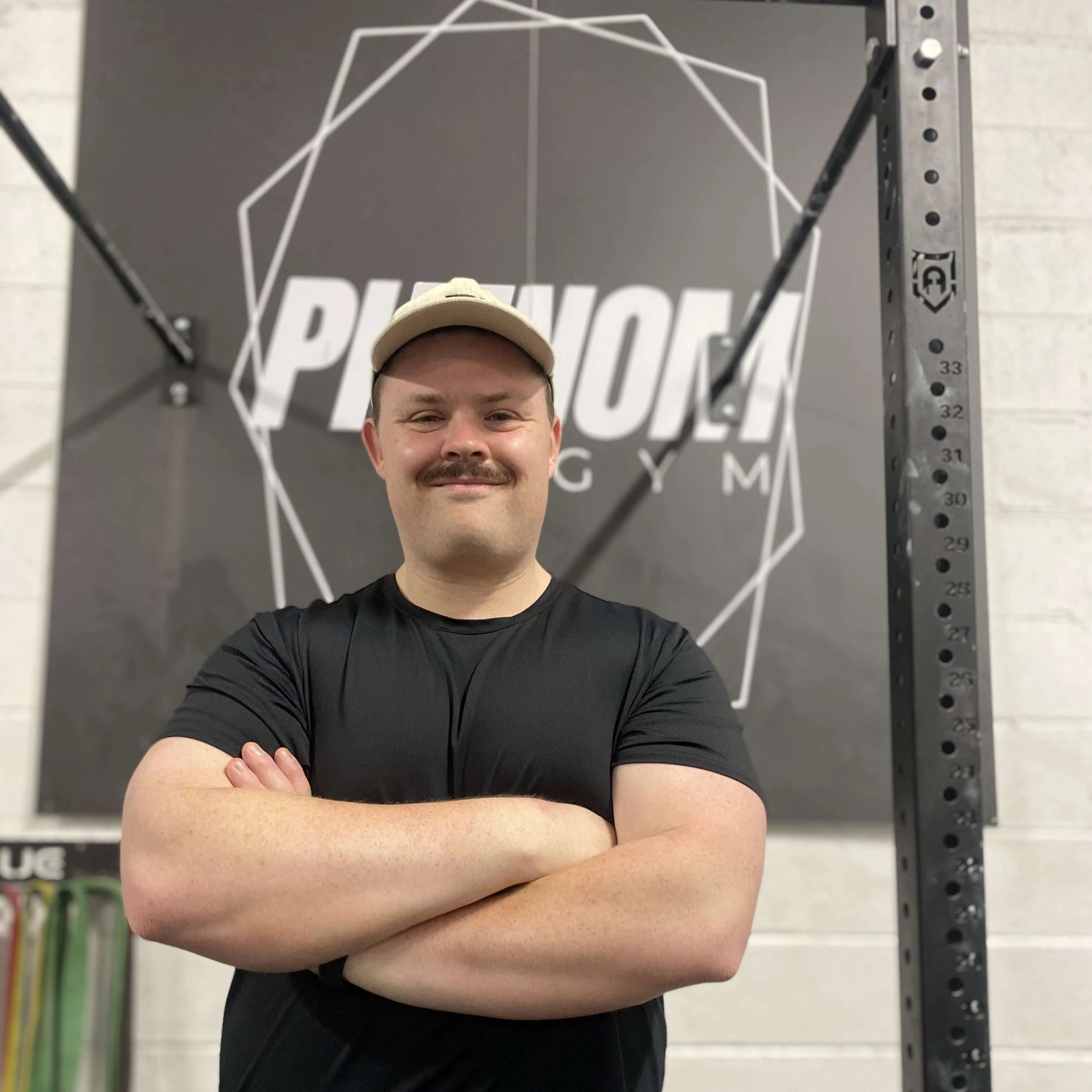
If the gym makes you nervous, you’re in very large company. I’m Charlie Johns, a personal trainer based in Cork, and most people who book a consultation with me say a version of the same thing: they don’t know what they’re doing, they’re worried about looking silly, or they tried before and it fizzled out. I started training at 13, so I remember exactly what it feels like to walk into a room full of people who look like they belong.
Below you’ll find why gym anxiety happens, what the research says, how to prepare, a first visit you can copy, a four-week plan, and when it’s worth getting a coach or speaking to your GP.
The short answer
- ✓ Go at a quiet time. Ask at reception when the gym is calmest and book that slot for your first few visits.
- ✓ Bring a plan. Type four or five exercises into your phone so you're never standing around.
- ✓ Keep it short. Thirty minutes, twice a week, for the first month.
- ✓ Start on machines. They show you where to sit and how to move, so there's less to remember.
- ✓ Ask when you're unsure. "Are you still using this?" is a normal thing to say in a gym.
Is gym anxiety normal?
Completely. In a Fitness First survey, two in five UK adults said they avoid the gym. The main reasons were feeling self-conscious about their appearance (39%), worrying about being judged on their fitness (27%) and not being sure how to use the machines (15%).
A 2026 paper in Frontiers in Sports and Active Living pulls together earlier research and reaches a helpful conclusion: gym anxiety is not a disorder. It’s an understandable reaction to walking into a place where everyone seems fitter and more experienced than you. It tends to hit hardest for women, people carrying extra weight, people with disabilities and anyone who already lives with anxiety.
It also helps to know you’re not behind. The HSE’s guidelines recommend muscle-strengthening work on two or more days a week, and only 46% of Irish adults meet the physical activity guidelines overall (Healthy Ireland Survey, 2019). If you’re not there yet, plenty of people around you aren’t either.
Why people notice you far less than you think
Psychologists have a name for the feeling that everyone is watching you: the spotlight effect. In a well-known set of experiments, students wore an embarrassing T-shirt into a room of strangers and overestimated how many people would remember it. We treat our own experience as the main event, and everyone else is busy with theirs.
In a gym, that’s even more true. The person on the next bench is counting reps, checking their phone or worrying about their own form. A glance from someone between sets isn’t a verdict on you. I can’t promise nobody will look. I can promise it matters far less than it feels like it does.
What’s actually making you nervous?
“Gym anxiety” is usually a few smaller worries bundled together. Pull them apart and each one has a fix.
| The worry | What helps |
|---|---|
| I don't know what to do | Bring a written plan, or ask for a free induction. Most gyms offer one. |
| I'll use the equipment wrong | Pick machines with instructions on them, and ask a member of staff to show you once. |
| People will judge my body or fitness | Go at a quiet time, wear something comfortable and put your headphones in. Most people aren't checking. |
| I don't know the unwritten rules | They're mostly ordinary manners. See the etiquette section below. |
| I've tried before and it didn't stick | Start smaller than you think you need to. See the four-week plan below. |
Before you go: make it easy on yourself
Most of the work happens before you leave the house. Cleveland Clinic’s advice on gym anxiety suggests researching the gym, asking for a tour and going at off-peak times.
Pick your time. Quiet slots vary between gyms, so ask at reception. Weekday mornings and early afternoons are often the calmest.
Take the tour. Ask someone to show you where the machines, water and changing rooms are.
Decide what you’re doing before you arrive. Walking in with a plan stops you drifting around. The one below will do for your first visit.
Give yourself a way out. You’re allowed to leave after 20 minutes. On day one, success means turning up and doing something, however small.
Your first visit: 30 minutes, four machines
Machines are the friendliest place to start because they guide the movement and most have a diagram on the side. Do two sets of ten on each, resting for a minute or so between sets.
| Step | Sets x reps | Coaching note |
|---|---|---|
| Easy walk on the treadmill or bike | 5 minutes | Slow enough to hold a conversation. |
| Leg press | 2 x 10 | Adjust the seat so your knees don't cave in. Keep the weight light. |
| Seated chest press | 2 x 10 | Press smoothly and don't lock your elbows out. |
| Seated cable row | 2 x 10 | Sit tall and squeeze your shoulder blades together. |
| Lat pulldown | 2 x 10 | Pull the bar to your upper chest and let it rise under control. |
| Easy walk to cool down | 5 minutes | Then go home. That's the whole session. |
Choose a weight you could lift about three or four more times at the end of each set. Write it down so you know what to try next time. You might feel a bit stiff for a day or two, which is normal for a first session. If you get sharp pain, dizziness or chest discomfort, stop and speak to your GP.
Gym etiquette in plain English
Most gym rules are just manners. If you can queue in a shop, you’ll be fine.
- → Ask before you jump in. "Are you still using this?" or "Mind if I work in?" is completely normal.
- → Wipe equipment down after you use it, and put weights back where you found them.
- → Give people space and don't film or comment on other people's training.
- → Use the staff. Showing members how equipment works is part of their job.
Nobody expects a beginner to know everything. Most regulars remember their first week and are far more likely to help than to judge.
Your first month, week by week
This plan builds the habit before it builds the workload.
| Week | Visits | What to do |
|---|---|---|
| 1 | 2 x 30 minutes | Do the first-visit workout above. Learn where everything is. |
| 2 | 2 x 30 to 40 minutes | Repeat it. Add a third set to any exercise that felt easy. |
| 3 | 2 to 3 visits | Try a dumbbell goblet squat in place of the leg press, at a quiet time. |
| 4 | 2 to 3 visits | Repeat your favourite session and compare your weights with week one. |
By week four the gym usually stops feeling like a foreign country. If you’re wondering how many days is right, my guide to how often you should go to the gym breaks it down by experience level, and how long it takes to see results will help you set fair expectations.
If you’ve tried the gym before and it didn’t stick
Most people who quit didn’t lack willpower. They lacked a plan. They went five days a week with no idea what to do, drifted between machines, felt lost and stopped. The approach failed, not the person.
That’s why I build structured plans for beginners. You always know what’s next, and it’s written down. My 12-week plans combine coached sessions with a written programme, and they’re built for people who’ve had a false start before.
When a coach helps, and when to see your GP
A coach isn’t a must, but they shortcut the awkward part. You get a plan, someone to show you the equipment and a familiar face for the first few weeks. There are a few ways to do it:
- → One-to-one: personal training at Phenom Gym is the fastest way to learn the room.
- → With a friend: group training for two to six people means you're not on your own.
- → From home first: online coaching lets you build confidence before you walk into a gym. My comparison of online and in-person training will help you choose.
If you’re weighing up the cost, I’ve set out what a personal trainer costs in Cork and how to choose one.
The bigger picture
Gym anxiety is common, understandable and very fixable. It fades with repetition, and most people find the fear was much bigger than the room.
I’m a personal trainer based in Cork, and I coach beginners at Phenom Gym in Ballintemple. If you’d like a hand with your first weeks, the easiest step is a free 30-minute consultation. We’ll talk about what’s worrying you and what you’d like to achieve, and I’ll tell you which option fits. No pressure, no sales pitch. You can also read more about me first.
Frequently asked questions
Is gym anxiety normal?
Yes. A Fitness First survey found two in five UK adults avoid the gym, mostly because they feel self-conscious or worry about being judged. A 2026 paper in Frontiers in Sports and Active Living describes gym anxiety as an understandable response to the gym environment, not a disorder.
How do I stop feeling self-conscious at the gym?
Go at a quiet time, arrive with a written plan and keep your first sessions short. Psychology research on the spotlight effect shows we overestimate how much other people notice us. Most people in a gym are focused on their own workout.
What should I do on my first day at the gym?
Keep it to about 30 minutes: a five-minute warm-up walk, then four simple machines such as the leg press, chest press, seated row and lat pulldown, for two sets of ten with a light weight. Finish with an easy walk and go home. Turning up is the win.
What is the best time to go to the gym if I'm nervous?
Mid-morning and early afternoon on weekdays are often the quietest, but it varies between gyms. Ask at reception when it's calmest, and try that slot for your first few visits.
Should I hire a personal trainer if I have gym anxiety?
It can help a lot. A trainer gives you a plan, shows you how the equipment works and stands beside you for the first few weeks. If the nerves feel like more than nerves, such as panic or avoiding everyday situations, speak to your GP as well.