
Can you do strength training if you have high blood pressure, and will it help? For most people whose blood pressure is under control, the answer to both is yes. Strength work can lower resting blood pressure, and the wall sit has some interesting research behind it. Some readings and symptoms need a doctor first.
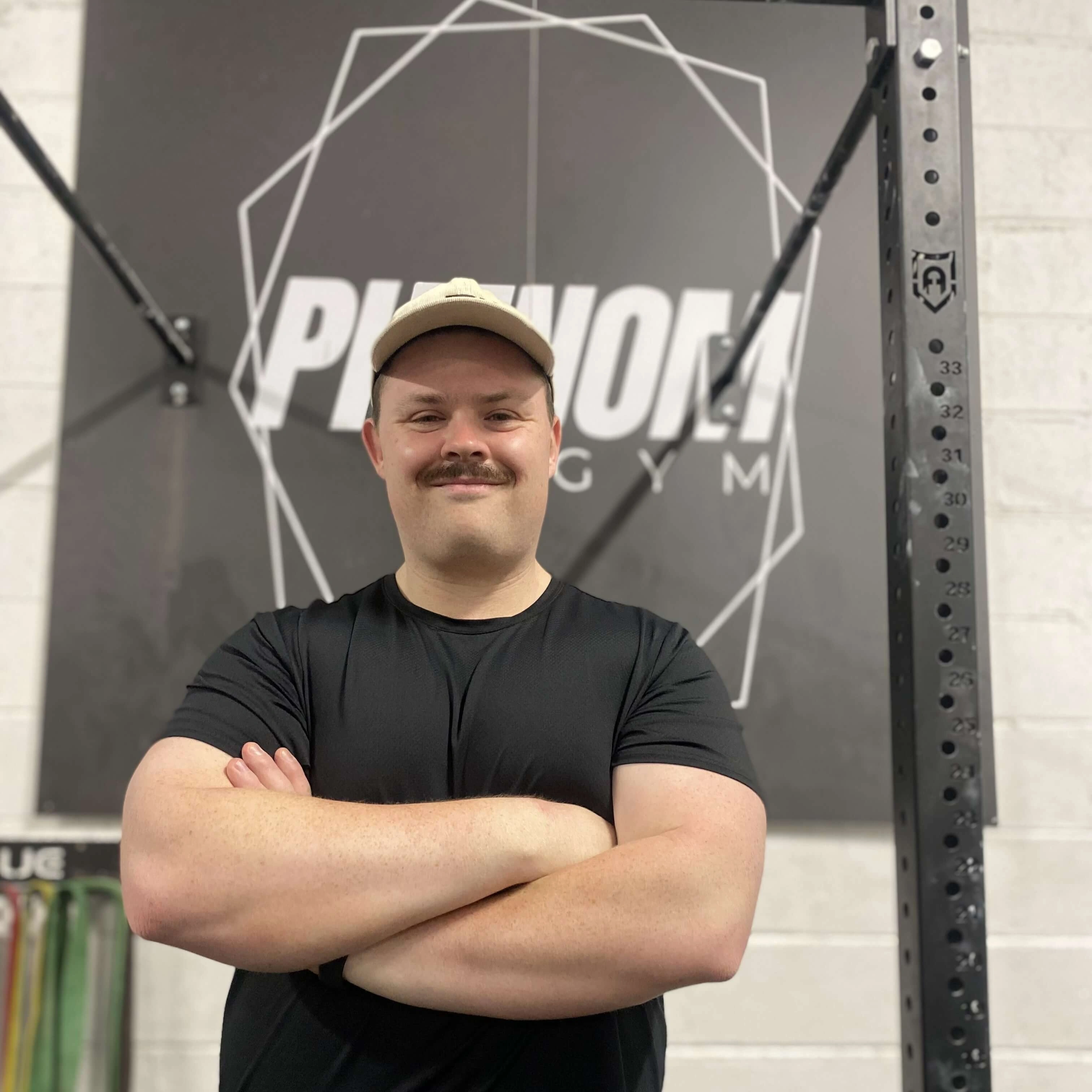
I’m Charlie Johns, a personal trainer based in Cork. I coach desk workers, parents and beginners, and “my GP says my blood pressure is up, can I still lift?” is a very fair question. I’m a trainer, not a doctor, so this guide shows you where the evidence is solid, where it’s thin and when your GP comes first.
The short answer
- ✓ Strength training helps. In a large 2023 review, lifting-style resistance training lowered resting blood pressure by about 4.6/3 mmHg on average.
- ✓ Isometric holds did best on average. Exercises such as the wall sit lowered it by about 8/4 mmHg in the same review.
- ✓ Keep your cardio. European guidelines pair regular aerobic exercise with strength work two to three times a week.
- ✓ Breathe on every rep. Avoid straining, breath holding and very heavy lifts while your pressure is raised.
- ✓ 180/110 or higher means wait. Get medical advice before you exercise.
What counts as high blood pressure?
A reading has two numbers. The top one (systolic) is the pressure as your heart beats, and the bottom one (diastolic) is the pressure between beats. The NHS counts it as high at 140/90 or more when a health professional checks it, or 135/85 or more at home. The Irish Heart Foundation also uses 140/90 for most people, with lower limits if you have diabetes, kidney disease, heart disease or have had a stroke. European guidelines call 120 to 139 over 70 to 89 “elevated”, which is a good time to act.
You usually can’t feel it. A 2026 study from Trinity College Dublin’s TILDA project, following more than 8,000 people aged 50 and over, found hypertension rose from 63% to 71% over 12 years. Only 56% of people with it were aware. The HSE advises a check at least once a year from age 40, or earlier in life if it runs in your family. Your GP surgery and some pharmacies can do it.
Does strength training lower blood pressure?
Yes, on average. A 2023 analysis in the British Journal of Sports Medicine pooled 270 randomised trials with 15,827 participants and compared exercise with no-exercise control groups.
| Type of exercise | Systolic (mmHg) | Diastolic (mmHg) |
|---|---|---|
| Isometric (wall sits and other holds) | 8.2 | 4.0 |
| Cardio and strength combined | 6.0 | 2.5 |
| Strength training with moving reps | 4.6 | 3.0 |
| Aerobic (walking, cycling, running) | 4.5 | 2.5 |
| High-intensity interval training | 4.1 | 2.5 |
These are averages, partly compared across separate trials, so don’t read the ranking as a verdict on your body. Several kinds of exercise work. Strength training also builds muscle and can help with blood sugar control in prediabetes.
The 2024 European Society of Cardiology guidelines recommend at least 150 minutes of moderate aerobic exercise a week (or 75 minutes of vigorous), plus moving or isometric strength training two to three times a week.
Do wall sits lower blood pressure?
The research says they can. An isometric exercise is one where a muscle works hard without moving, like sitting against a wall with no chair.
A study published in 2026 in BMJ Open Sport and Exercise Medicine looked at how often you need to do it. It involved 100 adults, average age 37, with normal to high-normal systolic pressure and no hypertension diagnosis. One group acted as a control. The rest did four two-minute wall squat holds, with two minutes’ seated rest between them, three times a week for four weeks. For the next four weeks they carried on three times, twice or once a week, or stopped.
| Weeks 5 to 8 | What happened |
|---|---|
| Three sessions a week | Down about 14 mmHg |
| Two sessions a week | Down about 7 mmHg |
| One session a week | Down about 7 mmHg |
| Stopped training | No longer meaningfully different from the control group |
Once a week held some benefit to the top number, three times a week had the biggest drop, and stopping lost it. The follow-up was only four weeks, and the once and twice weekly groups didn’t keep a clear drop in the bottom number.
What about people who already have hypertension? A 12-week study in Ecuador had 119 adults with diagnosed hypertension, none on medication at the start, do the same four-by-two-minute format three times a week, gradually sitting lower. Average readings went from 148/94 to 132/85. It had no comparison group and some people started medication along the way, so wall sits can’t take all the credit.
Is it safe to lift weights with high blood pressure?
Blood pressure rises while you exercise, and more so when you strain against a heavy load and hold your breath. Harvard Health advises breathing out on the effort and taking care with very heavy lifting. These are the rules I’d start you on:
Breathe out as you push or pull
Breathe in on the easy part of the rep. If you can't breathe steadily, the weight is too heavy or the hold is too long.
Stop short of your limit
Finish each set feeling you could have done two or three more good reps. Leave one-rep max testing alone.
Warm up and cool down
Give yourself five to ten easy minutes at each end of the session.
Get up slowly
Some blood pressure medicines can cause dizziness. The HSE lists dizziness on standing as a side effect of water tablets (diuretics).
Ask about your medication
Some tablets, such as beta blockers, slow your heart rate, so heart rate targets on a watch may not apply to you. Ask your GP or pharmacist.
A starter plan you can follow
This is my suggested starting point for someone who has been cleared to exercise. It’s gentler than some research protocols on purpose. Do the strength session twice a week on non-consecutive days, with one or two sets of each exercise to begin.
| Exercise | Reps | Coaching note |
|---|---|---|
| Sit to stand from a bench | 10 to 12 | Breathe out as you stand. Hold a light weight once it feels easy. |
| Seated cable or band row | 10 to 12 | Pull your elbows back without shrugging. |
| Incline push-up | 8 to 12 | A higher bench makes it easier. |
| Light dumbbell Romanian deadlift | 10 | Push your hips back and keep your back long. |
| Step-up | 8 each leg | Use a low step and hold a rail if you need to. |
Then add wall sits three times a week, at home or after your session:
- → Weeks 1 and 2: four holds of 30 seconds, only slightly bent at the knees, with two minutes' rest between.
- → Weeks 3 and 4: four holds of 60 seconds at the same height.
- → Week 5 onwards: add 15 to 30 seconds when it feels manageable, working towards two minutes. Slide lower only after that.
Round the week out with brisk walking, building towards at least 150 minutes. If your knees complain, sit higher or swap the exercise, and see my guide to strength training for arthritis. If you’re unsure how to fit it in, read how often you should go to the gym.
Food and sleep count too. The HSE suggests less than 6g of salt a day and at least six hours’ sleep a night. If your weight has crept up behind a desk, my guide to losing weight with a desk job covers the practical side.
When to see your GP first
Call 112 or 999 for sudden chest pain that doesn’t go away, or chest pain with sweating, nausea, light-headedness or shortness of breath.
The bigger picture
High blood pressure is quiet, and ignoring it lets the risk to your heart and brain build. Get your numbers checked, agree a plan with your GP, then train in a way you can repeat. If starting is the hard bit, I’ve written about gym anxiety as a beginner and why people keep quitting the gym.
I’m a personal trainer based in Cork, coaching at Phenom Gym in Ballintemple and Resolution Fitness in Douglas. You can work with me through a PT membership, one-to-one personal training or online coaching.
When you’re ready, book your free 60-minute personal training session and consultation. Bring your recent readings and anything your GP has said, and we’ll build your plan around them.
Frequently asked questions
Is it safe to lift weights with high blood pressure?
For many people with controlled blood pressure, yes, with moderate weights, steady breathing and your GP's go-ahead. If your resting reading is 180/110 or higher, Exercise is Medicine Australia advises postponing exercise and getting medical advice first.
What is the best exercise to lower blood pressure?
In a 2023 review of 270 trials, isometric exercise such as wall sits had the largest average drop in resting blood pressure. Aerobic exercise and strength training lowered it too, so pick a weekly plan you will keep doing.
How long should I hold a wall sit for blood pressure?
Research protocols often use four holds of two minutes with two minutes of rest between them, three times a week. Most beginners need to build up to that. Start higher up the wall with shorter holds and keep breathing throughout.
Can exercise replace blood pressure tablets?
Don't stop or change medication on your own. Exercise can help alongside it, but any change to your prescription is your GP's decision. Take a record of your readings to your appointment.
How long does it take for exercise to lower blood pressure?
Some wall sit trials have measured changes after four weeks. Treat that as a research result rather than a promise, give a new plan at least eight to twelve weeks, and keep checking your readings.